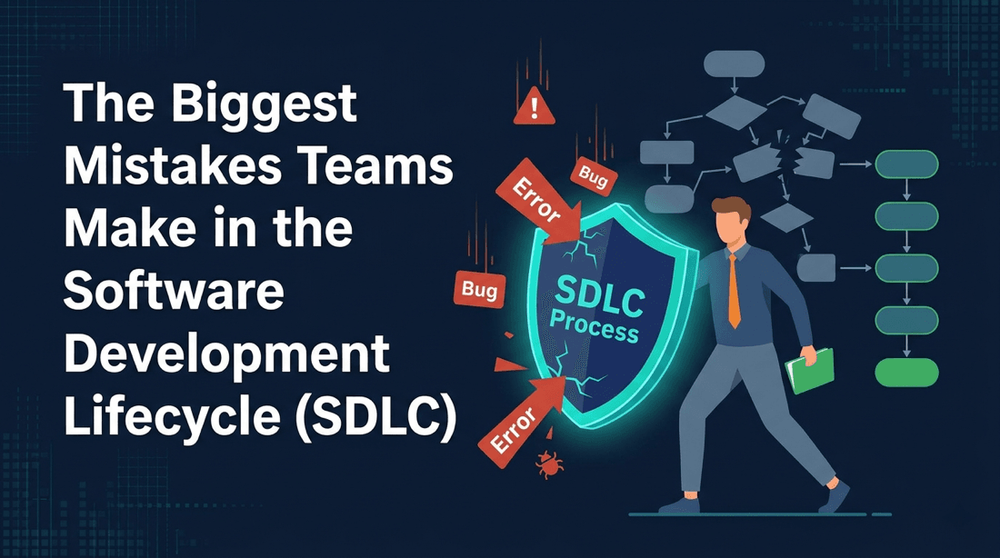
Software development isn’t just about writing clean code or shipping features quickly, it's about building something meaningful, reliable, and usable for real people. The Software Development Lifecycle (SDLC) gives teams a structured way to do that, guiding them from idea to deployment and beyond.
But here’s the reality: even experienced teams make mistakes. Not because they lack talent, but because software development is complex, fast-moving, and deeply human. Miscommunication, assumptions, and rushed decisions creep in more often than we like to admit.
If you’ve ever been part of a project that went off track, felt chaotic, or ended up needing endless fixes, then you’re not alone. Let’s walk through the most common mistakes teams make in the SDLC and, more importantly, how to avoid them.
What Is the Software Development Lifecycle and Why Does It Matter?
The Software Development Lifecycle (SDLC) is a structured process used by teams to design, develop, test, and deploy software systems. It provides a framework that ensures consistency, quality, and efficiency throughout the development journey.
Typically, the SDLC includes several key phases:
● Requirements gathering
● Planning
● Design
● Development
● Testing
● Deployment
● Maintenance
Each phase plays a crucial role, and mistakes in any one of them can ripple across the entire project. A well-executed SDLC ensures that teams stay aligned with business objectives, manage risks effectively, and deliver value to users in a predictable manner.
Without a disciplined lifecycle, development becomes chaotic leading to missed deadlines, poor product quality, and frustrated stakeholders.
What Are the Most Common Mistakes Teams Make in the SDLC—and How Can You Avoid Them?
1. Starting Without Truly Understanding the Problem
This is probably the most common and most costly mistake. Teams jump into building before fully understanding what they’re building and why.
Sometimes stakeholders aren’t clear. Sometimes requirements are rushed. And sometimes everyone assumes someone else has clarity.
The result? You build something that technically works… but doesn’t solve the real problem.
What helps:
Slow down at the beginning. Ask more questions than you think you need. Clarify edge cases. Write things down. A little extra effort here can save weeks (or months) later.
2. Treating Planning Like a Formality

Planning often gets treated as a checkbox for something to get through so “real work” can begin.
But without thoughtful planning, teams underestimate timelines, overlook dependencies, and walk straight into avoidable roadblocks.
What this feels like in real life:
● Deadlines constantly slipping
● Developers feeling rushed
● Last-minute chaos before releases
What helps:
Plan realistically, not optimistically. Break work into smaller chunks, involve the team in estimation, and assume that things will take a bit longer than expected—because they usually do.
3. Communication That Sounds Fine… But Isn’t
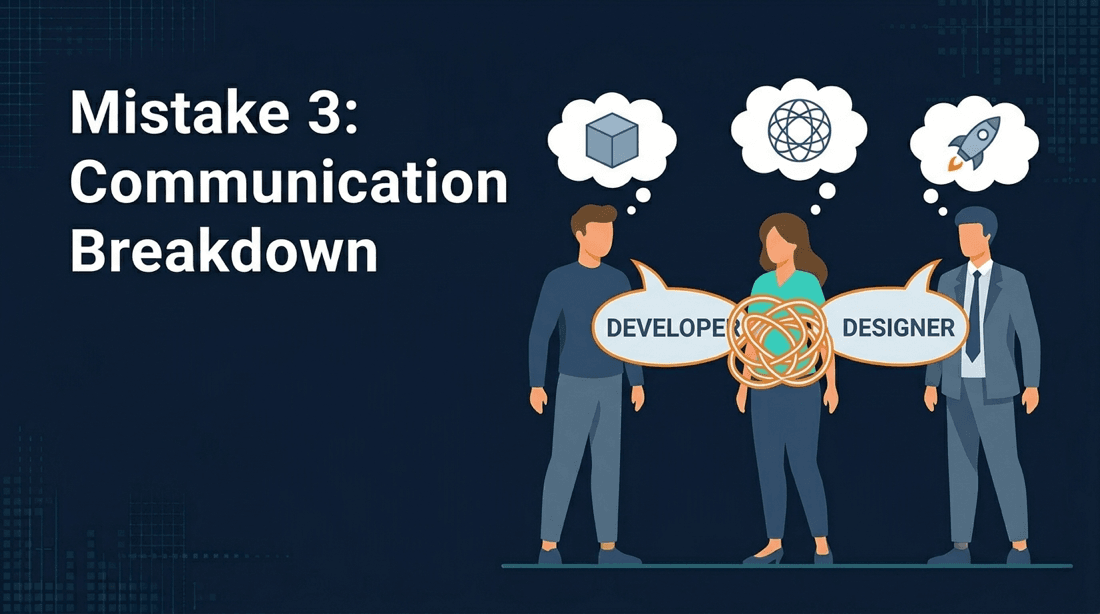
On the surface, communication might seem okay, meetings happen, messages are sent but misunderstandings still pile up.
A developer interprets a feature one way. A designer imagines it differently. The stakeholder expects something else entirely.
No one is wrong but no one is aligned either.
What helps:
Create space for clarity. Encourage people to ask “obvious” questions. Repeat and confirm understanding. Good communication isn’t about talking more, it’s about making sure everyone is on the same page.
4. Rushing and Creating Technical Debt
We’ve all seen it: “Let’s just ship it quickly, we'll fix it later.” But “later” rarely comes.
Shortcuts pile up. Code becomes harder to maintain. Small issues turn into big ones. Eventually, progress slows to a crawl because the foundation isn’t solid anymore.
What helps:
Balance speed with sustainability. Not everything needs to be perfect—but it should be good enough to build on. And make time to clean things up regularly.
5. Treating Testing Like the Final Step
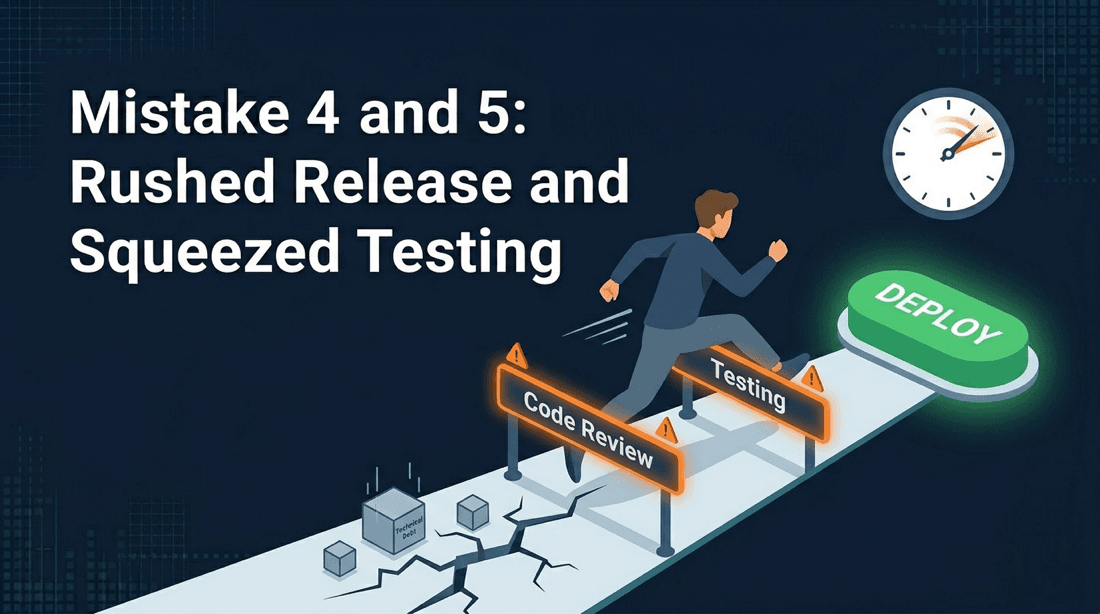
Testing often gets squeezed into the end of the timeline right when everyone is already under pressure. That’s when bugs slip through.
And those bugs don’t just cause technical problems—they affect real users.
What helps:
Think of testing as something that happens throughout development, not after it. Even small improvements like writing basic automated tests or reviewing edge cases early can make a huge difference.
6. Messy Version Control Habits
Version control is supposed to make collaboration easier—but without discipline, it can do the opposite.
Unclear commit messages, chaotic branching, and last-minute merges create confusion and risk.
What this leads to:
● “Who changed this?” moments
● Painful merge conflicts
● Fear of deploying code
What helps:
Keep things simple and consistent. Write meaningful commit messages. Agree on a workflow as a team and actually follow it.
7. Leaving Stakeholders Out of the Loop
Sometimes teams only involve stakeholders at the beginning and the end. That’s risky.
Because by the time feedback arrives, it’s often too late or too expensive to make meaningful changes.
What helps:
Bring stakeholders along for the journey. Share progress regularly. Show working features early. Small, frequent feedback prevents big surprises later.
8. Overcomplicating (or Oversimplifying) the Solution
Some teams build systems that are far more complex than necessary. Others build something too simple that can’t handle real-world use.
Both come from the same place: guessing instead of understanding.
What helps:
Focus on what’s needed now while keeping an eye on the future. You don’t need to solve every possible problem upfront, but you also shouldn’t ignore obvious growth needs.
9. Skipping Documentation Because “We’ll Remember”
No one ever remembers as much as they think they will.
When documentation is missing, knowledge stays in people’s heads. And when those people are unavailable, everything slows down.
What this looks like:
● New team members struggling to onboard
● Repeated questions
● Confusion about how things work
What helps:
Document just enough to be useful. Keep it simple clear notes, diagrams, and explanations go a long way.
10. Risky and Stressful Deployments
If deploying code feels scary, something’s wrong. Manual processes, lack of testing, and unclear rollback plans turn deployments into high-stress events.
What helps:
Automate as much as possible. Build confidence in your deployment process. A good release should feel routine, not risky.
11. Thinking the Job Ends After Deployment
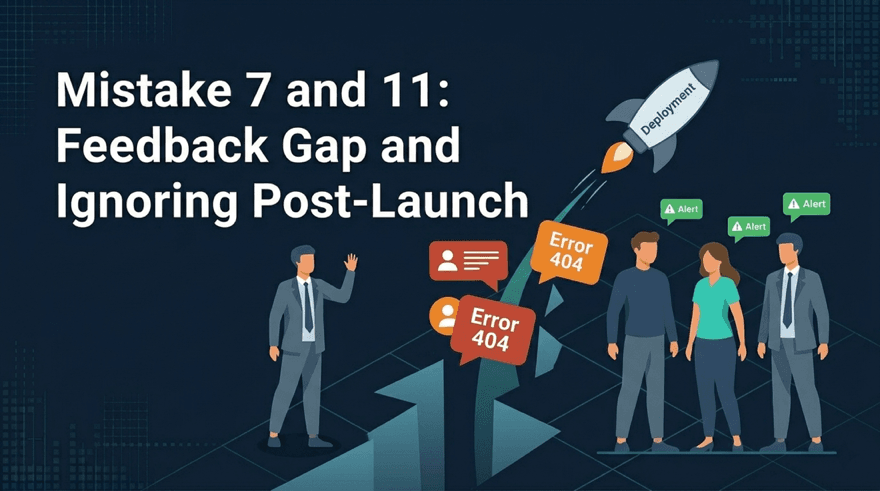
Shipping the product isn’t the finish line, it’s the beginning of real-world usage. Users will behave in unexpected ways. Bugs will appear. Performance issues will surface.
Ignoring this phase means missing valuable insights.
What helps:
Monitor your system. Pay attention to user feedback. Treat post-launch as an opportunity to learn and improve.
12. Not Learning from Past Mistakes
This one is subtle but powerful. Teams often repeat the same mistakes not because they don’t care, but because they don’t pause to reflect.
Without reflection, there’s no improvement.
What helps:
Take retrospectives seriously. Talk honestly about what worked and what didn’t. And most importantly act on those insights.
Why Do These Mistakes Keep Happening Even in Experienced Teams?
Experience doesn’t eliminate mistakes, it just changes their nature. In many cases, these issues persist because teams are under constant pressure to deliver faster. Deadlines, client expectations, and competitive markets push teams to prioritize speed over process.
There’s also a human factor. People assume, overlook details, or avoid difficult conversations. Over time, small gaps in communication or planning grow into bigger problems.
The key is not to aim for perfection, but to build awareness. Teams that openly acknowledge these patterns are far more likely to fix them.
How Can Teams Build a More Reliable and Effective SDLC Process?
Improving your SDLC isn’t about adopting the latest framework or tool, it’s about consistency and mindset.
Start by strengthening the basics:
● Communicate clearly and often
● Document what matters
● Involve stakeholders regularly
● Invest in testing and code quality
● Reflect and improve continuously
Small, consistent improvements often have a bigger impact than sweeping changes. A team that learns and adapts together will always outperform one that simply follows a process blindly.
Final Thoughts
At its core, the SDLC isn’t just a technical framework, it’s a human process. It’s about people working together to solve problems, make decisions, and build something valuable. Mistakes are part of that journey. Every team makes them.
What sets great teams apart isn’t perfection, it’s awareness. It’s the willingness to slow down when needed, communicate clearly, and continuously improve.
If you recognize some of these mistakes in your own experience, that’s actually a good sign. It means you’re paying attention. And in software development, that’s half the battle won.